[…]
[…]
The Council of Canadian Child and Youth Care Associations is the national networking organization representing the child and youth care professions in Canada.
The Council strives to promote the association movement throughout the nation and through them promote and encourage professional development, advocacy and
networking for the membership. Member associations are represented to the Council by representatives and their members are in turn are viewed as members of
the Council. Please use the links provided to explore member association web sites, Council initiatives and information pages.
The Council strives to promote the association movement throughout the nation and through them promote and encourage professional development, advocacy and
networking for the membership. Member associations are represented to the Council by representatives and their members are in turn are viewed as members of
the Council. Please use the links provided to explore member association web sites, Council initiatives and information pages.
| Provincial Member Associations |
Newfoundland Nova Scotia Prince Edward Island New Brunswick Quebec Ontario Manitoba Alberta British Columbia






| Features |


Don Totten is a long time Child and Youth Care Counsellor at Hull Child and Family
Services in Calgary. Don has a passion for kids, Child and Youth Care, skiing, motorcycles
and old steam locomotives. Last year Don got to live out one of his childhood dreams by
working as a crew member on a cross Canada trip on a famous steam engine called The
Empress. His experience was published in the July 2005 edition of MacLean's magazine.
Pat Foran, President of the CYCAA, kindly sent Don's article along to share with the
national audience. It will be published in the association's newsletter as well. Please use
the link to read: The Empress Still Rules
Services in Calgary. Don has a passion for kids, Child and Youth Care, skiing, motorcycles
and old steam locomotives. Last year Don got to live out one of his childhood dreams by
working as a crew member on a cross Canada trip on a famous steam engine called The
Empress. His experience was published in the July 2005 edition of MacLean's magazine.
Pat Foran, President of the CYCAA, kindly sent Don's article along to share with the
national audience. It will be published in the association's newsletter as well. Please use
the link to read: The Empress Still Rules
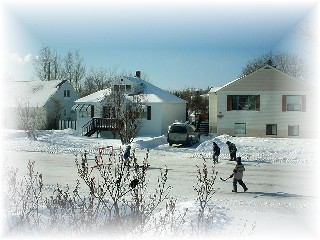
In towns large and small a nation seized with winter, ice hockey is the perfect antidote to freezing temperatures and long months of snow and ice. For
Canadian youth hockey begins just outside the door of the house with road hockey. The basics are covered as players are introduced to the game and
the tumble of checking and high sticking. Passions stir and young people enter local leagues that allow them to craft their skills and move up through
successive levels leading ultimately to the NHL and professional play. For the truly blessed, the ultimate is the national team that will play in the winter
Olympics which will consume the country soon. For those who never loose the attachment to the game, pick up games and local leagues exist to
allow hockey to be part of your adult life. There are programs emerging now that expose the disadvantaged to what has become an expensive sport. If
you have a potential star player in your care, seek out these and give them a boost that potentially could take them to the big leagues.
Canadian youth hockey begins just outside the door of the house with road hockey. The basics are covered as players are introduced to the game and
the tumble of checking and high sticking. Passions stir and young people enter local leagues that allow them to craft their skills and move up through
successive levels leading ultimately to the NHL and professional play. For the truly blessed, the ultimate is the national team that will play in the winter
Olympics which will consume the country soon. For those who never loose the attachment to the game, pick up games and local leagues exist to
allow hockey to be part of your adult life. There are programs emerging now that expose the disadvantaged to what has become an expensive sport. If
you have a potential star player in your care, seek out these and give them a boost that potentially could take them to the big leagues.
 | |  | |  | |  | |  |
| All rights reserved Council of Canadian Child and Youth Care Associations/Garth Goodwin 1995-2010 |




If you are lucky, Dr. Lorraine E.
Fox will come into your life as
a child and youth care
professional by way of a
workshop, conference or
training session. Lorraine
will be the Keynote speaker at
Everybody Matters, the CYCAA
Provincial Conference. She
now has a web site and will
be publishing more of her
articles for downloading at
lorrainefox.com.
Fox will come into your life as
a child and youth care
professional by way of a
workshop, conference or
training session. Lorraine
will be the Keynote speaker at
Everybody Matters, the CYCAA
Provincial Conference. She
now has a web site and will
be publishing more of her
articles for downloading at
lorrainefox.com.
 |
| Lola was a Youth Care practitioner with the Crisis Stabilization Unit at Marymound in Manitoba. She had a dream to work with young people in Africa and took a year's leave and embarked upon a true journey into the unknown taking only her faith and child and youth care skills with her. Following a year back in Canada, Lola is now operating a home in Uganda for orphaned young boys. She has married and had her first child. The home has seen its first graduate with high marks. She will continue her journal on a website established to support their program. The link is provided here to allow those who have followed her journey to continue to do so and consider supporting her initiative. More |
| Portfolio |
| Features was a way to bring forward exception child and youth care related stories known or brought to the attention of the webmaster that illustrate aspects of the child and youth care experience. Submissions are welcomed. The Council of Canadian Child and Youth Care Associations does not endorse and is not responsible for the content of external sites. Links will open in new window. |

Membership in the Council is confusing for some. In fact, the provincial child and youth care
associations are the members. These are listed above and may be visited through the icon links
provided. Members of provincial associations are considered members of the Council through their
associations. The Council is funded by a formula which sees five dollars for each member up to a
ceiling of 200 members contributed toward the Council. The Council board meets annually and by
teleconference throughout the year. Annual meetings always run concurrent to national conferences
and wherever possible in conjunction with a provincial conference in non-conference years. The
Council hosts the National Child and Youth Care Conference, publishes an annual newsletter (click
on links to the left) and promotes professional development sponsoring initiatives such as the Poster
Project and the Standards Initiative. The Council also sponsors the National Child and Youth Care
Award.
associations are the members. These are listed above and may be visited through the icon links
provided. Members of provincial associations are considered members of the Council through their
associations. The Council is funded by a formula which sees five dollars for each member up to a
ceiling of 200 members contributed toward the Council. The Council board meets annually and by
teleconference throughout the year. Annual meetings always run concurrent to national conferences
and wherever possible in conjunction with a provincial conference in non-conference years. The
Council hosts the National Child and Youth Care Conference, publishes an annual newsletter (click
on links to the left) and promotes professional development sponsoring initiatives such as the Poster
Project and the Standards Initiative. The Council also sponsors the National Child and Youth Care
Award.
Council of Canadian Child and Youth Care Associations
| | | | | | | | |

 |
| |
 |
| |
 |
| |
 |
| |
 |

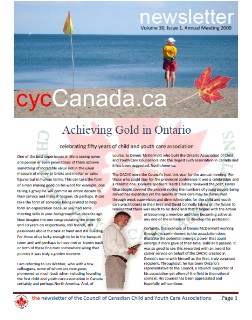
Click on the newsletter cover icon above to
download PDF format copy of the annual
meeting newsletter.
download PDF format copy of the annual
meeting newsletter.

The Council of Canadian Child and Youth Care
Associations does not endorse and is not responsible for
the content of external sites. Links will open in new
window.
Associations does not endorse and is not responsible for
the content of external sites. Links will open in new
window.


then and has matured into a published poet now. Moreover, she formed a business to sell her
books, her CD's and her live events. I invite child and youth care professionals to explore the world
of Ingrid D Johnson through the link provided which features sound clips of her work. The venues
for that exploration are many, yet each feature elements that will be familiar to you as a child
and youth care worker. Website
books, her CD's and her live events. I invite child and youth care professionals to explore the world
of Ingrid D Johnson through the link provided which features sound clips of her work. The venues
for that exploration are many, yet each feature elements that will be familiar to you as a child
and youth care worker. Website
Community: Everybody Matters, the first
provincial conference the CYCAA has
hosted since 2004 will take place at the
Grant MacEwan University Campus in
Edmonton, May 5-7, 2010.
provincial conference the CYCAA has
hosted since 2004 will take place at the
Grant MacEwan University Campus in
Edmonton, May 5-7, 2010.


Nominations for the National Child and Youth Care
Award are open with a deadline of April 30, 2010
All members can nominate a fellow member who
best illustrates the child and youth care profession
for others. Go to the CYC Award icon above.
Award are open with a deadline of April 30, 2010
All members can nominate a fellow member who
best illustrates the child and youth care profession
for others. Go to the CYC Award icon above.



In June of 2009 the Ontario Association of Child and Youth Counsellors
celebrated a true milestone with its 50th anniversary as North America's
largest and longest running child and youth care association. The article
originally published here to recognize the event is now archived as a
feature.
celebrated a true milestone with its 50th anniversary as North America's
largest and longest running child and youth care association. The article
originally published here to recognize the event is now archived as a
feature.
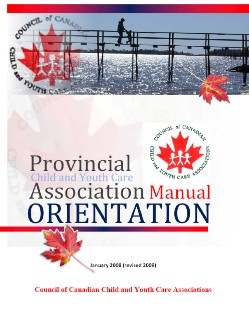
| Introducing the Orientation Manual... |

2010 is a national child and youth care conference year. The 16th National - Making Connections will take place in Winnipeg at the Delta, May 26 - 28th. The
conference committee is meeting monthly now, preparing the program, anticipating introducing registration in the new year and pulling together the details. To
assist the conference a web site that will be up-dated as information becomes available; has been developed. Please accept this as your invitation to attend. It is
also Manitoba's 140th anniversary as a province and is celebrating with a year long homecoming event. If you are from Manitoba, have lived in Manitoba or simply
been a frequent guest to the province, the conference will be the child and youth care event for this celebration. You will leave having made connections with child
and youth care professionals from across the country and beyond and also with a sense of Manitoba itself. Click on the conference logo to view the web site.
conference committee is meeting monthly now, preparing the program, anticipating introducing registration in the new year and pulling together the details. To
assist the conference a web site that will be up-dated as information becomes available; has been developed. Please accept this as your invitation to attend. It is
also Manitoba's 140th anniversary as a province and is celebrating with a year long homecoming event. If you are from Manitoba, have lived in Manitoba or simply
been a frequent guest to the province, the conference will be the child and youth care event for this celebration. You will leave having made connections with child
and youth care professionals from across the country and beyond and also with a sense of Manitoba itself. Click on the conference logo to view the web site.

| Bill 21 threatens progress of professional child and youth care status... |
counselors, psycho-educators, psychologists, social-workers and
family therapists. In this first reading of the law, (which happened in
June), Law makers did not consider the “Educator” as a part of the
list of professions.
The academic and practical training of the Educator provides
him/her with the skills to make clinical observation, make an
assessment and determine the appropriate strategies and
measures within the context of the intervention planning
process. Under this law the educator, who is not considered to be a
professional, would no longer be permitted to perform professional
Acts associated with intervention planning. Bill 21
also limits the Educator’s ability to make a clinical decision
concerning a client’s suicidal or violent behavior, specifically when
these behaviors would require the application of
physical restraint or isolation. Only a professional, as listed above,
would be permitted by law, to make this clinical decision. In simple
terms this means that this law diminishes
the role of the Educator. The Educator would no longer be
considered a professional but rather as an aid to the professionals
listed above, much like a nurse’s aide or a beneficiary attendant.
Batshaw Youth and Family Centre’s policies recognize Educators’
clinical skills and their ability
to carry out clinical interventions. If this bill were to pass into law in
its present form it would have major implications in Batshaw and all
other health and social services agencies across Quebec.
The Q.A.E. has joined with other Quebec Educator
associations, (Regroupement québécois des associations
professionnelles de l’éducation spécialisée) and is participating at
the hearings at the provincial level in an effort to sensitize the
government about the importance of our
profession. This issue is about the survival of the Educator’s
role as a clinician.
More information is to come in the near future. QAE Board meetings
are held every 3rd Thursday of the month and are open to all
members.
Roger Fortin, President
Quebec Association of Educators
November 2009
family therapists. In this first reading of the law, (which happened in
June), Law makers did not consider the “Educator” as a part of the
list of professions.
The academic and practical training of the Educator provides
him/her with the skills to make clinical observation, make an
assessment and determine the appropriate strategies and
measures within the context of the intervention planning
process. Under this law the educator, who is not considered to be a
professional, would no longer be permitted to perform professional
Acts associated with intervention planning. Bill 21
also limits the Educator’s ability to make a clinical decision
concerning a client’s suicidal or violent behavior, specifically when
these behaviors would require the application of
physical restraint or isolation. Only a professional, as listed above,
would be permitted by law, to make this clinical decision. In simple
terms this means that this law diminishes
the role of the Educator. The Educator would no longer be
considered a professional but rather as an aid to the professionals
listed above, much like a nurse’s aide or a beneficiary attendant.
Batshaw Youth and Family Centre’s policies recognize Educators’
clinical skills and their ability
to carry out clinical interventions. If this bill were to pass into law in
its present form it would have major implications in Batshaw and all
other health and social services agencies across Quebec.
The Q.A.E. has joined with other Quebec Educator
associations, (Regroupement québécois des associations
professionnelles de l’éducation spécialisée) and is participating at
the hearings at the provincial level in an effort to sensitize the
government about the importance of our
profession. This issue is about the survival of the Educator’s
role as a clinician.
More information is to come in the near future. QAE Board meetings
are held every 3rd Thursday of the month and are open to all
members.
Roger Fortin, President
Quebec Association of Educators
November 2009
Provincial and Territorial Child and Youth Care Associations. The Council has
(formally since 1987). The goals of the Council are to promote the (formally
since 1987). The goals of the Council are to promote the development of child
and youth care as a profession in Canada and ensure the delivery of quality
care. The following objectives pertain to the writing of this letter:
The Council believes Bill 21 is an important piece of legislation in the
Province of Quebec and the inclusion of Educators is critical to its importance.
It will allow the Child and Youth Care Profession the opportunity to maintain
the high standards and credibility we have attained. This was well
demonstrated at the extremely successful 8th International Child and Youth
Care Conference held in Montreal in October of 2006.
This Bill has the ability to strengthen the helping profession in the Province of
Quebec and ensure the quality of care for the thousands of troubled young
people and their families. However, if Bill 21 is passed without the inclusion
of Educators, it would be taking an enormous step back in providing mental
health services to troubled young people and their families in the Province of
Quebec.
Government continues to support the progression of Child and Youth Work
with the development of Diploma, Degree, Masters and PhD. Programs
across Canada. These schools are training future Educators to be dynamic,
qualified members of treatment teams in a variety of settings which includes
but is not limited to mental health centres, schools, hospitals, corrections and
private practice. Our clinical contribution often takes place at any point during
the day and occurs within the clients’ daily living often resulting in ‘on the spot’
crisis prevention and intervention. Being unable to provide this type of clinical
intervention is detrimental to the well being of the client(s) as well as placing
the client, the worker and the public at great risk due to our inability to
intervene in a timely and therapeutic manner.
This is a critical moment in the state of our profession within the Province of
Quebec and has the potential to negatively influence the lives of many
Quebecors. I want to ensure that the committee understands the significance
of this decision within the field of Child and Youth Care. If you have any further
questions I can be reached at 416-491-5050 Ext. 5488.
In the name of Child and Youth Care
Sincerely,
David Connolly
President
Council of Canadian Child and Youth Care Associations
Cc: Roger Fortin, President of the Quebec Association of Educators
Tony Maciocia, Batshaw Youth and Family Centres
(formally since 1987). The goals of the Council are to promote the (formally
since 1987). The goals of the Council are to promote the development of child
and youth care as a profession in Canada and ensure the delivery of quality
care. The following objectives pertain to the writing of this letter:
- To promote the development of child and youth care as a profession in
Canada. - To support and promote member associations in the development of
standards of practice. - Advocate for children and youth at a national level.
The Council believes Bill 21 is an important piece of legislation in the
Province of Quebec and the inclusion of Educators is critical to its importance.
It will allow the Child and Youth Care Profession the opportunity to maintain
the high standards and credibility we have attained. This was well
demonstrated at the extremely successful 8th International Child and Youth
Care Conference held in Montreal in October of 2006.
This Bill has the ability to strengthen the helping profession in the Province of
Quebec and ensure the quality of care for the thousands of troubled young
people and their families. However, if Bill 21 is passed without the inclusion
of Educators, it would be taking an enormous step back in providing mental
health services to troubled young people and their families in the Province of
Quebec.
Government continues to support the progression of Child and Youth Work
with the development of Diploma, Degree, Masters and PhD. Programs
across Canada. These schools are training future Educators to be dynamic,
qualified members of treatment teams in a variety of settings which includes
but is not limited to mental health centres, schools, hospitals, corrections and
private practice. Our clinical contribution often takes place at any point during
the day and occurs within the clients’ daily living often resulting in ‘on the spot’
crisis prevention and intervention. Being unable to provide this type of clinical
intervention is detrimental to the well being of the client(s) as well as placing
the client, the worker and the public at great risk due to our inability to
intervene in a timely and therapeutic manner.
This is a critical moment in the state of our profession within the Province of
Quebec and has the potential to negatively influence the lives of many
Quebecors. I want to ensure that the committee understands the significance
of this decision within the field of Child and Youth Care. If you have any further
questions I can be reached at 416-491-5050 Ext. 5488.
In the name of Child and Youth Care
Sincerely,
David Connolly
President
Council of Canadian Child and Youth Care Associations
Cc: Roger Fortin, President of the Quebec Association of Educators
Tony Maciocia, Batshaw Youth and Family Centres